
BY VALERIE HAWLEY

RECRUITMENT STRATEGY
TRANSFORMING ENROLLMENT
Developed a measurable, audience-centered recruitment strategy that aligned research, workforce demand, digital engagement, and integrated communications to support long-term enrollment growth across undergraduate, graduate, and doctoral programs.
33%
INCREASE IN NEW STUDENT ENROLLMENT
67%
OF STUDENT INQUIRIES GENERATED THROUGH INTEGRATED CAMPAIGNS
6
CAMPUS & NATIONAL RECRUITMENT MARKETS SUPPORTED
THE CHALLENGE
The KU School of Social Welfare needed a more strategic and measurable recruitment approach to support enrollment growth across undergraduate, graduate, and doctoral programs while addressing audience differences, workforce shortages, and increasing competition.
RESEARCH & AUDIENCE INSIGHT
Recruitment strategy began with research designed to better understand audience motivations, market conditions, workforce needs, competitive positioning, and barriers to enrollment. SWOT analysis, enrollment data, audience behaviors, industry trends, and workforce shortages were evaluated to identify opportunities for growth and areas requiring differentiated communication strategies.
Research revealed that each audience segment — BSW, MSW, and PhD — had distinct perceptions, priorities, and decision-making factors, requiring tailored messaging, engagement approaches, and conversion pathways throughout the recruitment journey.

Organizational & Market Analysis

Workforce Demand Across Kansas
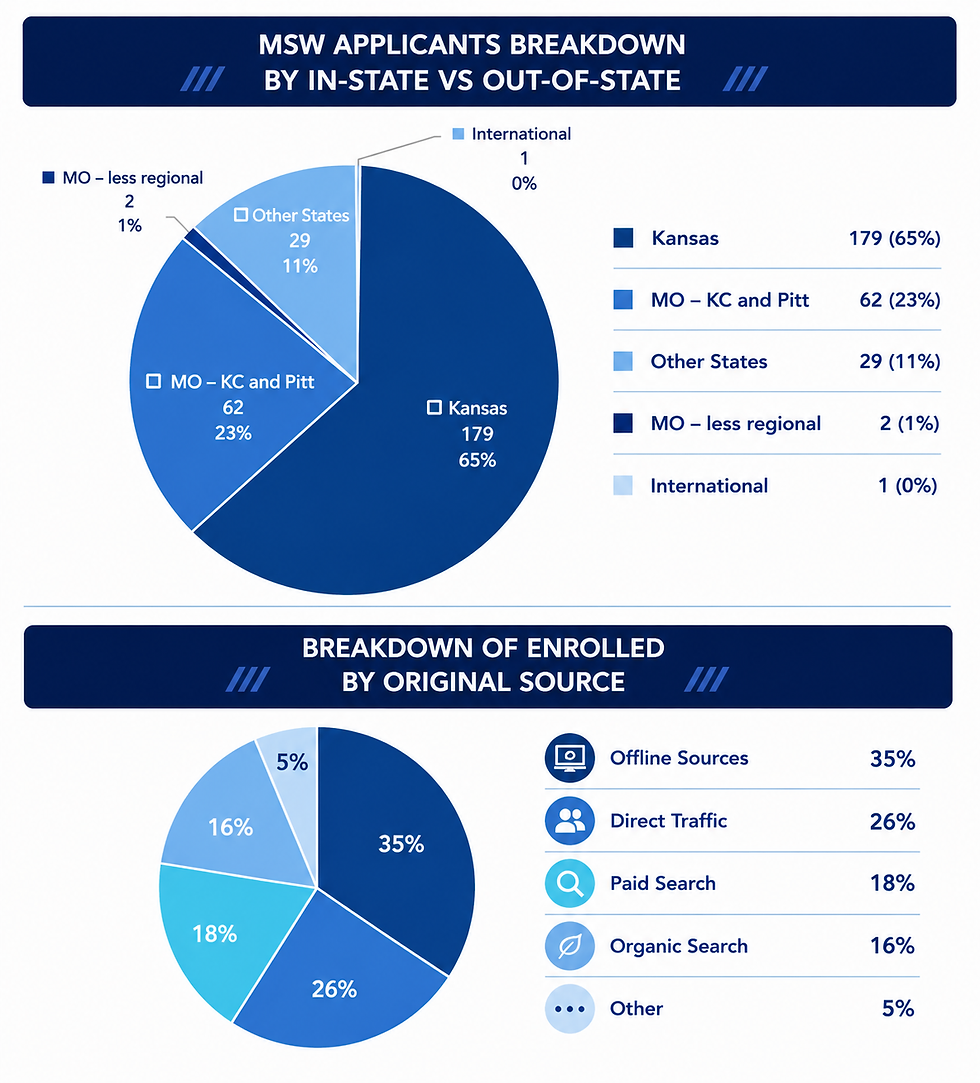
Audience & Enrollment Insights
DATA, GOALS & FUNNEL STRATEGY
Recruitment strategy began with enrollment goals and worked backward through conversion and audience data to establish measurable objectives and guide recruitment strategy throughout the enrollment journey.
Enrollment Goal (increase 10% from last year)
230
Accept Goal (lose 10% to defers)
260
Admit Goal (75% admit to accept)
346
Application Goal (90% application to admit)
386
Inquiry Goal (30% inquiry to application)
1280
Prospective students are more likely to apply if they have attended an event
Schedule Event Goal (30% inquiry to scheduled event)
386
Attend Event Goal (75% schedule to attend event)
290
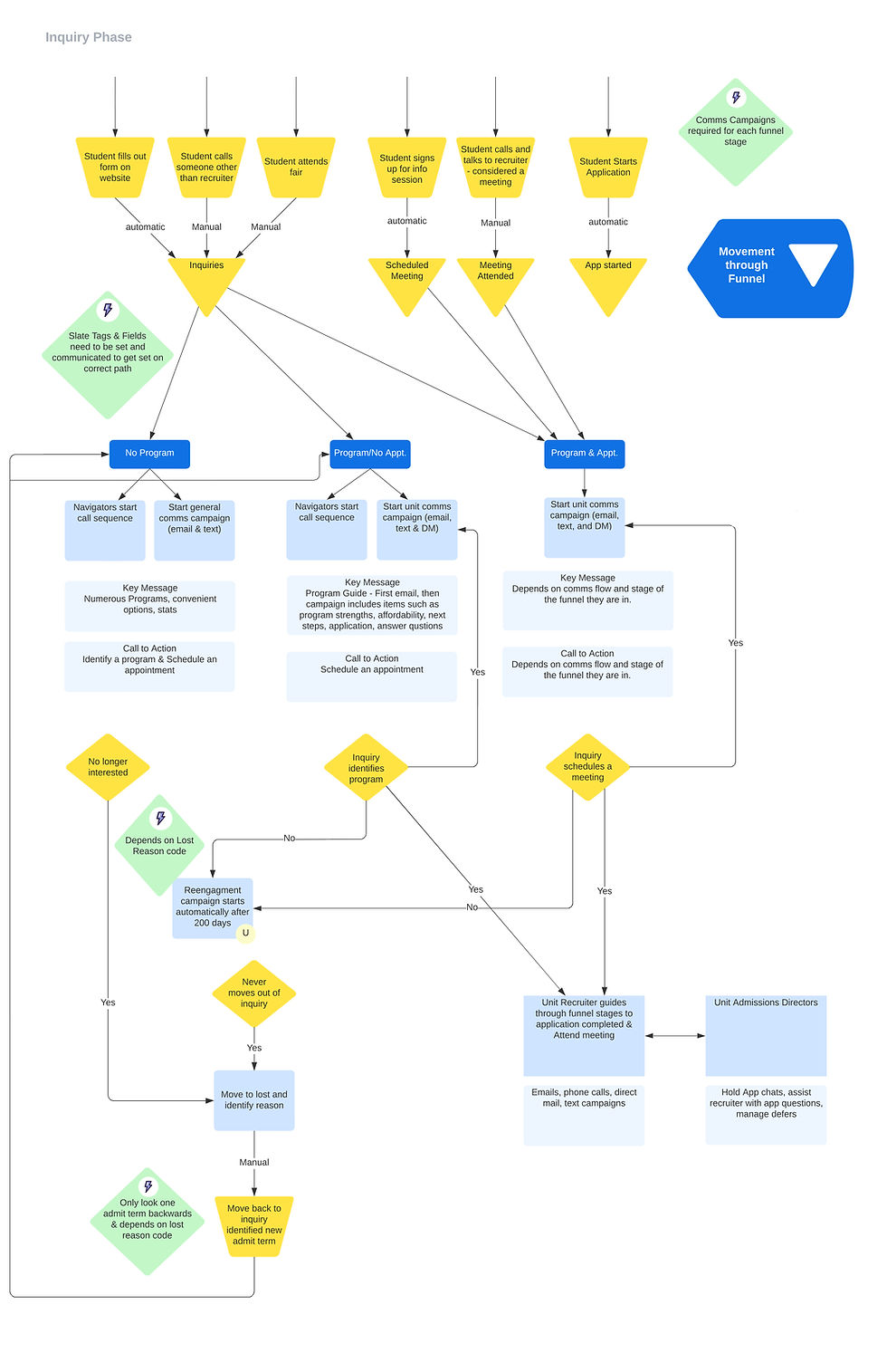
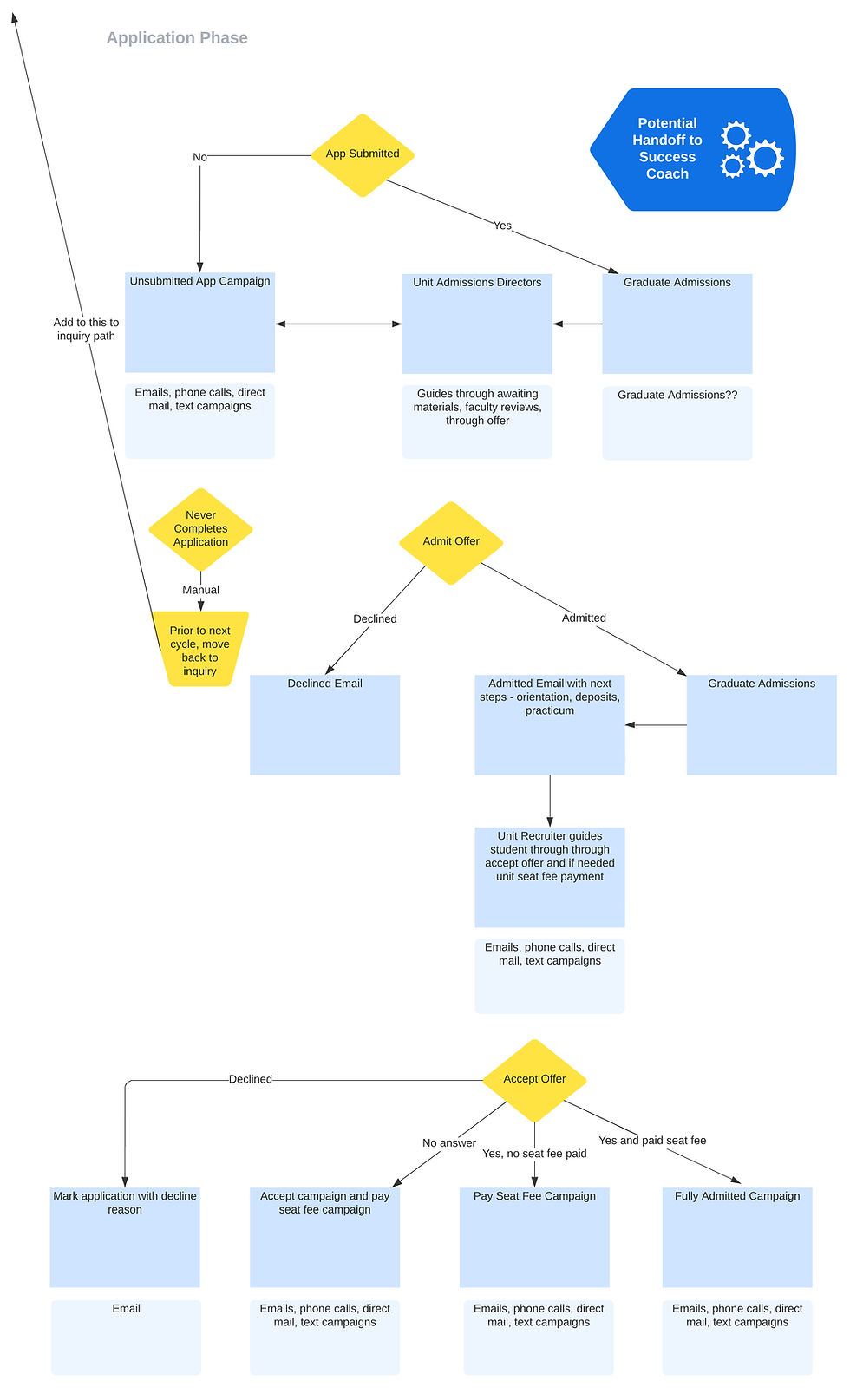
INTEGRATED RECRUITMENT STRATEGY
Using research, audience insight, and funnel objectives, I developed an integrated recruitment strategy designed to move prospective students through the enrollment journey in measurable and intentional ways.
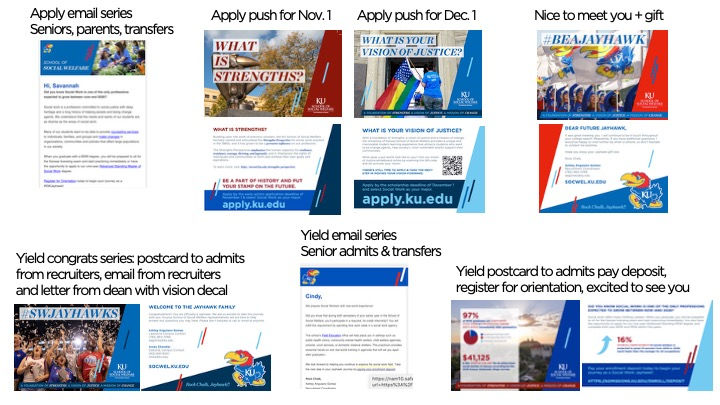
Messaging, communication timing, channel selection, and engagement tactics were tailored to each audience segment to reach the right audience, in the right place, at the right time, with the right message.


Focused on increasing awareness and reframing perceptions of social work through emotionally engaging messaging and career-focused storytelling.
Key Focus Areas
-
Leadership & advocacy
-
Career pathways
-
Purpose-driven work
-
Profession awareness


Objectives were connected directly to enrollment and inquiry goals, while individual tactics supported those broader outcomes through measurable engagement strategies. Each tactic carried its own performance indicators — such as attendance rates, email engagement, conversions, or response behavior — while collectively contributing to larger recruitment and organizational goals.

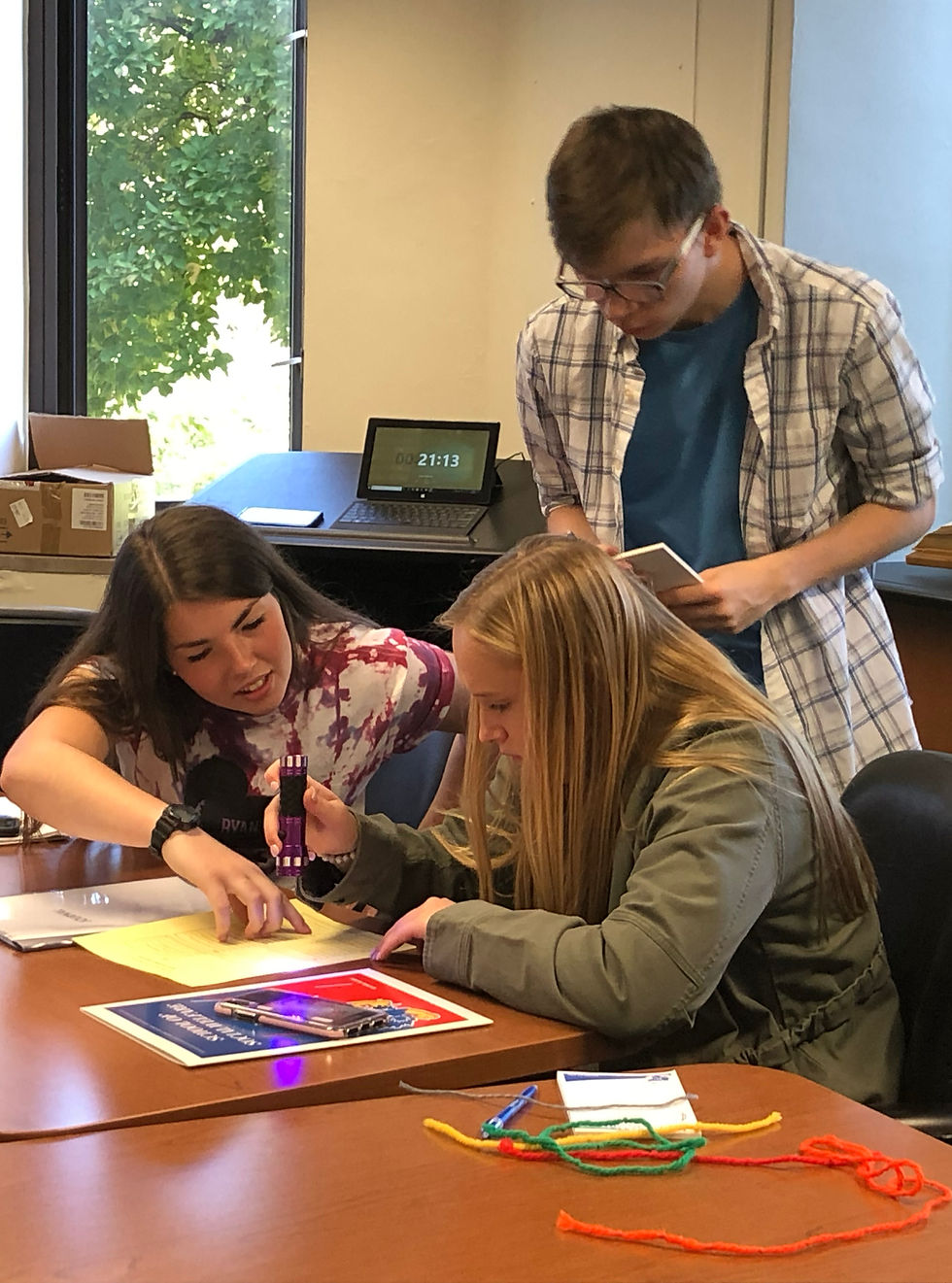
DESIGNING EXPERIENTIAL ENGAGEMENT
Recruitment strategy expanded beyond traditional information sessions by introducing interactive experiences that strengthened connection, participation, and emotional investment throughout the enrollment journey.
Experiences were designed to help prospective students:
Connect with peers
Explore the profession more deeply
Engage directly with program culture
Interact with faculty and student support staff


Results
Recruitment efforts evolved from disconnected tactics into a more integrated enrollment strategy that aligned audience insight, messaging, digital engagement, experiential marketing, and measurable planning.


